Why Smoothing Leggings Only Work If the Compression Runs the Right Direction
Two pairs of leggings marketed as smoothing can use the exact same fabric weight and still perform completely differently, because the direction the compression actually pulls in matters more than how strong that compression is — and most shoppers only ever check the second thing.
Why Compression Direction Matters More Than Compression Strength for a Smoothing Effect
The direction-over-strength logic: the vertical-compression-pulls-and-lengthens-rather-than-smooths (the fabric that primarily compresses top-to-bottom creating a pulled, taut look rather than an evenly smoothed one — the vertical-pull-doesnt-smooth), the the-horizontal-and-multi-directional-compression-actually-redistributes-evenly (the fabric engineered to pull in multiple directions at once being what actually creates a smooth, even surface — the multi-directional-creates-smoothness), the the-fabric-can-feel-equally-tight-in-store-regardless-of-direction (the a simple squeeze test in a fitting room failing to reveal which direction the compression is actually running — the squeeze-test-cant-tell-direction), and the reframe (strength of squeeze being a poor proxy for whether a fabric will actually smooth, since direction is the variable that determines the visible result)).
The Specific Fit Test That Reveals Whether It’s Working Correctly
How to actually check: the do-a-few-squats-and-torso-twists-while-wearing-it (the testing the fabric under actual movement rather than only standing still in a mirror — the test-under-movement-not-standing), the the-check-for-any-visible-bunching-or-rolling-at-the-waist-during-motion (the compression that’s only working in one direction often revealing itself through bunching once the body moves — the bunching-reveals-wrong-direction), the the-compare-how-the-fabric-looks-standing-still-versus-mid-movement (the a genuinely multi-directional smoothing fabric holding its shape consistently in both states — the consistent-across-still-and-moving), and the frame (squatting, twisting and comparing standing-still versus in-motion appearance being the real test — one that a static in-store squeeze simply can’t replicate).
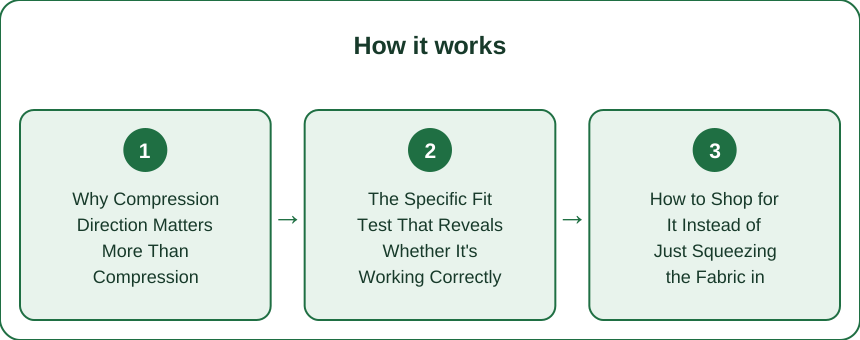
How to Shop for It Instead of Just Squeezing the Fabric in Store
The practical shopping approach: the look-for-language-like-four-way-stretch-or-multi-directional-compression-specifically (the brands that engineer true smoothing usually naming the construction explicitly on the label — the look-for-specific-construction-language), the the-read-reviews-for-mentions-of-movement-not-just-initial-feel (the other buyers’ experience during actual wear being more useful than a first-touch impression — the read-reviews-for-movement-feedback), the the-buy-from-brands-with-a-return-policy-and-actually-test-it-in-motion-at-home (the the real test happening during a real workout rather than a fitting room, so a flexible return window matters — the test-at-home-with-return-option), and the frame (looking for explicit multi-directional construction language, reading reviews for movement-specific feedback, and testing at home with a return option available — a shopping process built around the direction question, not just the squeeze).
Two pairs of leggings with identical fabric weight can smooth completely differently because compression direction determines the visible result more than compression strength does — fabric that mainly compresses vertically tends to pull and lengthen rather than smooth, while true multi-directional compression redistributes evenly, and a simple in-store squeeze can’t tell the two apart. The real test is doing a few squats and torso twists while wearing the leggings and comparing how the fabric looks standing still versus in motion, since bunching or rolling during movement reveals compression that’s only working in one direction. Shop for it by looking for explicit language like four-way stretch or multi-directional compression, reading reviews for movement-specific feedback rather than first-touch impressions, and buying from brands with a flexible return policy so the fabric can actually be tested in motion at home.
Keep Reading
This article is for general informational and styling purposes only. Fit, sizing, and product availability may vary — check current details before purchasing.